How to Pick a Wood Ring for Men: A Decision Guide
Choosing a wood tungsten ring is a different decision than picking a traditional metal band, and it trips people up for a simple reason: there's no established playbook for it yet. With gold or silver, most people already know roughly what they're comparing. With wood, the variables — species, grain, pairing material, width — are new territory, and it's easy to end up scrolling a collection with no clear way to narrow it down.
Here's a more useful way to approach it: instead of browsing by what looks nice in a photo, work through four questions in order. Each one eliminates options until you're left with a short list instead of an entire catalog.
Question 1: What Does the Wood Say About Him?
Every wood species carries a different feel, and this is usually the right starting point, especially if you're choosing for someone else.
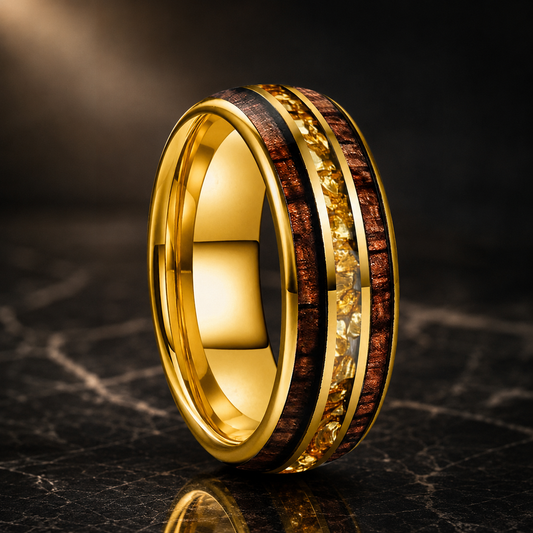
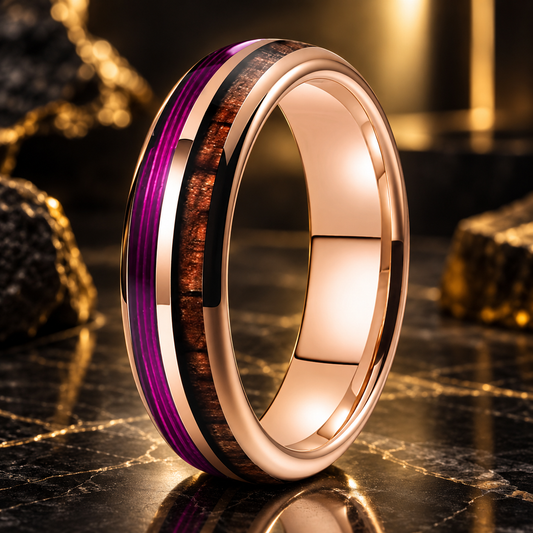
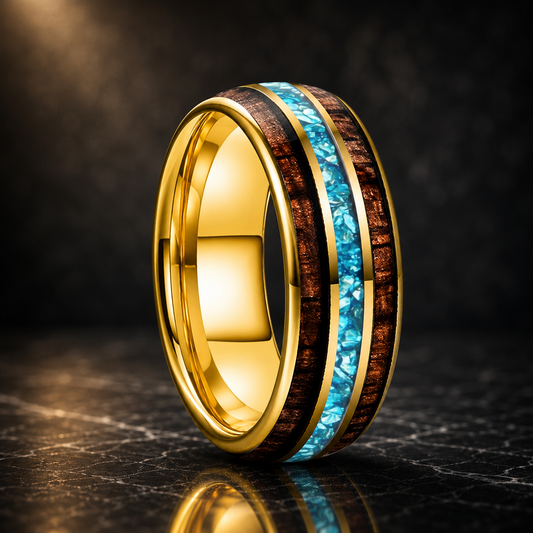
Koa wood is warm, rich, and carries real cultural weight — native to Hawaii and traditionally associated with strength and courage. It reads as premium and distinctive without being flashy, and it's the right pick for someone who wants a ring with a story behind it, not just a look.
Cedar leans more rustic and understated, with a lighter tone and straighter grain. It suits someone with an outdoorsy, low-key style — someone who'd never wear anything that reads as "jewelry" but still wants a wedding band with character.
Ebony is dark, dense, and formal-looking, closer in tone to a traditional black band than the lighter woods. It's the pick for someone who wants the individuality of a wood inlay without straying far from a classic, boardroom-appropriate look.
Whiskey barrel wood carries an obvious built-in story — reclaimed from real barrel staves, often with visible grain variation tied to the aging process. It's a natural fit for someone with a genuine connection to whiskey, bourbon, or craft spirits as a hobby or interest, where the material itself becomes a conversation piece.
If none of these descriptions immediately clicks, that's a signal to move to the next question rather than agonizing over wood species first.
Question 2: Will He Actually Wear It Every Day?
This determines how much durability and low-maintenance design should weigh into the decision.
If the ring is for daily wear — a wedding band worn without interruption, work included — prioritize a design where the wood inlay is set into a substantial tungsten carbide band rather than a thinner, more delicate design. The core material is what handles daily impact regardless of wood choice, so this matters less for durability and more for how substantial the ring feels on the hand day to day.
If it's more of an occasional or statement piece — not a primary wedding band — a bolder pairing (wood with meteorite, opal, or abalone) makes more sense, since it doesn't need to disappear into a work routine the way an everyday band does.
Question 3: What Width Fits His Hand and His Style?
Width affects both fit and how much the ring stands out:
6mm or narrower suits a more understated look and generally works well on smaller or average hand sizes without feeling bulky.
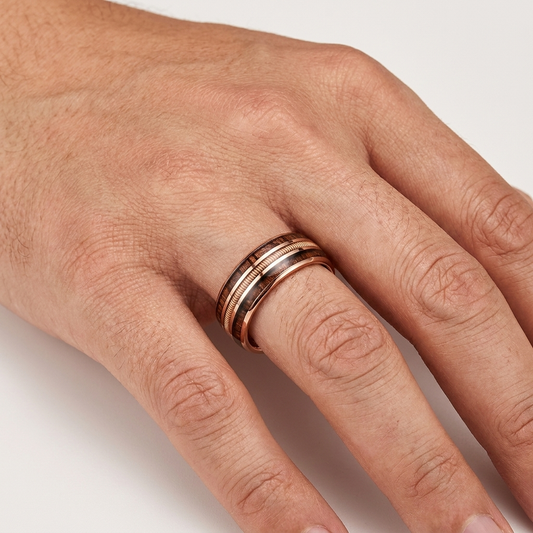
8mm is the most common choice for a men's statement piece — substantial enough to feel present without being oversized, and the width most wood tungsten wedding bands default to.
If he already wears other jewelry, look at what width feels proportional to what he's used to. If this is his first ring, 8mm is a safe, popular default for most hand sizes.
Question 4: What's the Occasion?
Wedding band. A clean, single-species inlay — koa alone, or cedar alone — tends to read as more appropriate for daily wedding-band wear, since it's less likely to feel like a fashion statement years down the line.
Engagement or proposal ring. Bolder pairings — koa with opal, or koa with meteorite — work well here specifically because engagement pieces are more often meant to stand out.
Everyday or gift piece, not tied to a wedding. This is where you have the most freedom to lean into whichever wood and pairing genuinely fits his personality from Question 1, since there's no formality constraint to work around.
Putting It Together
A quick way to use this: pick the wood species from Question 1 that fits him best, then let the occasion from Question 4 decide whether you're looking at a clean single-species design or a bolder pairing. Width and daily-wear considerations narrow the specific ring from there.
If koa's warmth and story feel like the right fit, our koa wood ring collection covers everything from a clean, single-species band to bolder pairings with meteorite, opal, and abalone. For the full range across every wood species — cedar, ebony, whiskey barrel, and more — browse the complete wood tungsten ring collection.
Whatever you choose, remember that tungsten can't be resized after purchase, so getting an accurate size before ordering matters as much as the design itself — our ring sizing guide covers exactly how to measure correctly, including ways to size discreetly if it's meant to be a surprise.
Frequently Asked Questions
What's the most popular wood for a men's wedding ring? Koa wood is generally the most requested species, valued for its warm grain and the strength/courage symbolism tied to Hawaiian tradition — though cedar and ebony are common picks for a more understated or formal look, respectively.
What width should a men's wood tungsten ring be? 8mm is the most common and generally reads as a proportional, substantial fit for most hand sizes; 6mm or narrower suits a more understated look.
Is a wood ring appropriate for a wedding band, or is it too casual? A clean, single-species wood inlay reads as appropriate for daily wedding-band wear. Bolder pairings with meteorite or stone are more commonly chosen for engagement pieces or statement rings rather than an everyday wedding band.
How do I choose between different wood species without seeing them in person? Match the wood's character to the wearer's personality first — koa for warmth and story, cedar for understated and outdoorsy, ebony for dark and formal, whiskey barrel for a hobby connection — rather than choosing based on photos alone.