The Advantages of Rings Made with Wood and Tungsten
Pairing wood and tungsten in a single ring might sound like an odd combination at first — one material is famously soft and organic, the other is one of the hardest metals used in jewelry. In practice, that contrast is exactly what makes the combination work, since each material compensates for what the other lacks on its own.
Durability Without Sacrificing Character
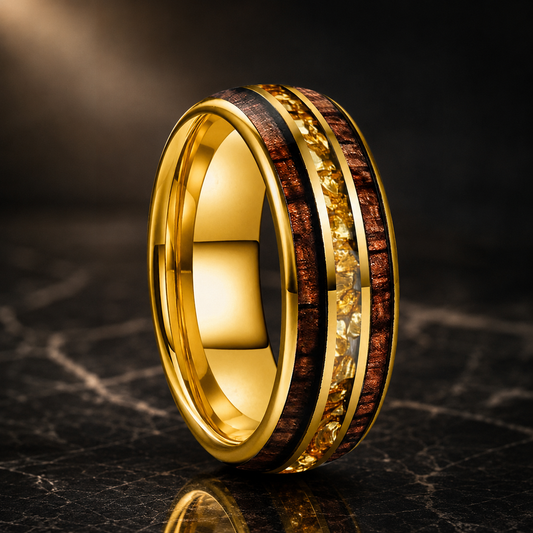
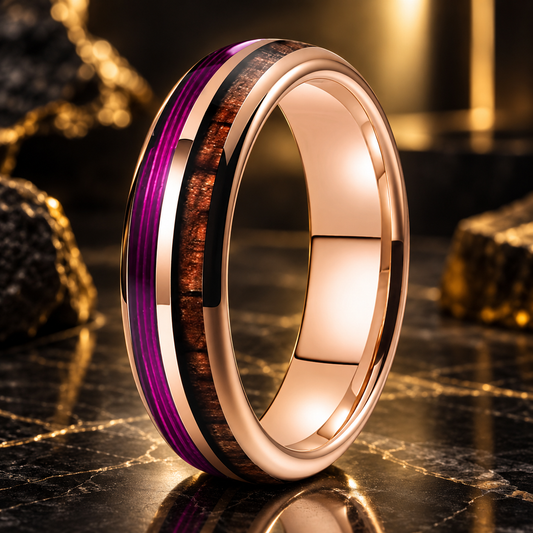
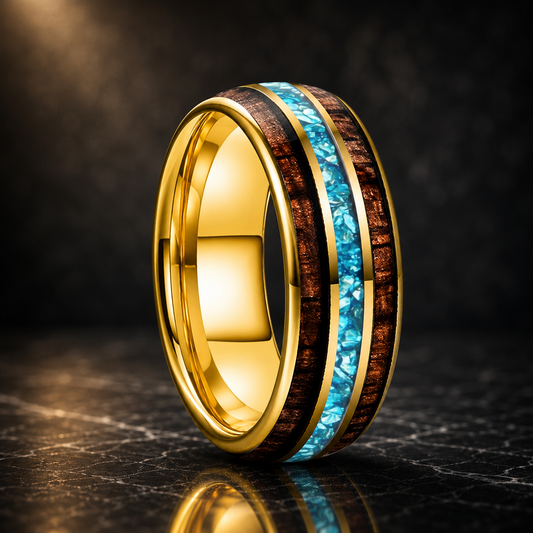
A ring made entirely of wood wears down quickly under daily use — scratching, warping, and losing its finish within months of regular wear. A ring made entirely of metal, while durable, lacks the visual warmth and individuality that wood provides. Combining them solves both problems at once: the tungsten carbide shell handles the structural demands of daily wear, resisting scratches and impact far better than traditional metals, while the wood inlay delivers grain, color, and texture that a plain metal band simply can't offer. Neither material has to compromise on what it does best.
Genuine Visual Uniqueness
Wood grain is naturally variable, which means no two wood inlay rings look completely identical, even within the same design and wood species. That's a meaningful advantage over mass-produced metal jewelry, where every unit of a given design is visually indistinguishable from the next. For buyers who want a ring that feels personal rather than interchangeable, that natural variation in grain pattern is a genuine point of difference, not just a marketing detail.
Low Maintenance Compared to Traditional Metals
Traditional precious metals like gold and platinum require periodic polishing to maintain their finish, since they scratch and dull with regular contact. Tungsten carbide resists that kind of wear significantly better, holding its finish through years of daily use with essentially no upkeep required. Because the wood inlay is sealed and protected within the tungsten structure rather than left exposed, it benefits from that same low-maintenance quality — it doesn't need the kind of active care a standalone wood ring would require to avoid drying out or cracking.
Hypoallergenic by Nature
Tungsten carbide contains no nickel and doesn't trigger the skin reactions associated with some traditional metal alloys, making it a common choice for people with metal sensitivities. Since the wood inlay sits protected within the tungsten structure rather than the skin coming into direct contact with adhesives or reactive materials elsewhere in the ring, wood tungsten rings tend to be a comfortable option for buyers who've had reactions to other jewelry in the past. This combination of durability and hypoallergenic material is difficult to find in a single ring made from other materials.
Meaningful Symbolism
Wood carries natural, organic symbolism — growth, connection to nature, and often a specific personal or cultural story depending on the species (Hawaiian koa, reclaimed whiskey barrel oak, and so on). Tungsten's near-permanence pairs naturally with the idea of lasting commitment, particularly for wedding and engagement rings. Together, the two materials tell a more layered story than either could alone: something organic and specific, protected by something built to last.
Cost-Effective Without Feeling Generic
Compared to a comparable ring in gold or platinum, wood tungsten rings typically come at a meaningfully lower price point, without feeling like a budget compromise. The distinctive wood inlay gives the ring visual interest that doesn't rely on precious metal cost to feel special, which makes it an appealing option for buyers who want something that looks and feels considered without the price tag traditionally associated with that level of visual impact.
A Practical Choice for Everyday Wear
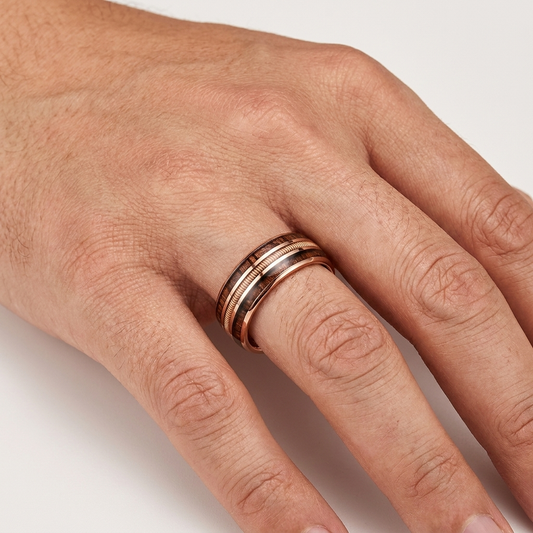
Beyond aesthetics, the combination is genuinely practical for anyone who wears their ring daily through work, exercise, and ordinary hand use. The tungsten shell shrugs off the scratching and impact that would damage a softer metal or a solid wood ring, while the wood inlay stays protected and vibrant underneath that structure. Exploring the range of wood and tungsten combinations makes it easy to see how these advantages play out across different wood species and design styles.
Why the Combination Works
The core advantage of a wood tungsten ring isn't just that it looks distinctive — it's that the pairing is genuinely well-engineered, with each material doing the job it's naturally suited for. That combination of durability, low maintenance, visual uniqueness, and meaningful symbolism is difficult to replicate with any single material on its own, which is exactly why wood and tungsten together have become such a popular choice for modern rings.